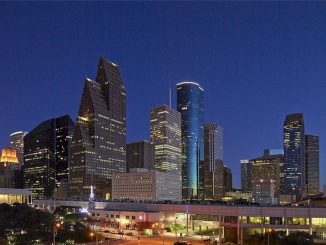
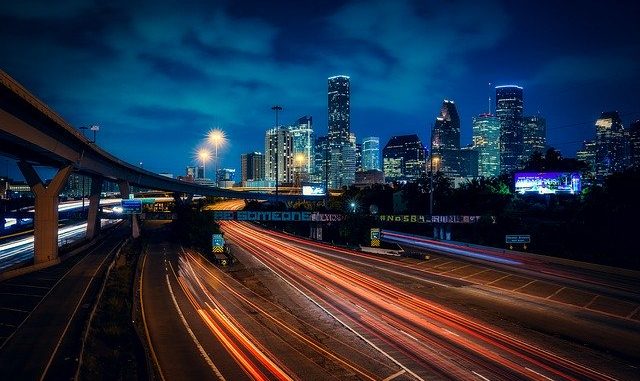
The rest of the country is beginning to see what we Houstonians love about our city — that it may not be full of “world class” tourist attractions, but it’s a city that gets things done.
From Orrin Judd come a couple of articles in the national press. First, there’s a New York Times article by Simon Romero, “Houston finds business boon after Katrina.” Here’s an excerpt:
Perhaps no city in the United States is in a better spot than Houston to turn Katrina’s tragedy into opportunity. And businesses here are already scrambling to profit in the hurricane’s aftermath.
Oil services companies based here are racing to carry out repairs to damaged offshore platforms in the Gulf of Mexico; the promise of plenty of work to do sent shares in two large companies, Halliburton and Baker Hughes, soaring to 52-week highs last week. The Port of Houston is preparing for an increase in traffic as shippers divert cargoes away from the damaged ports of Pascagoula, Miss., and New Orleans.
Owners of office space here are witnessing a surge in leasing as New Orleans companies, including that city’s oldest bank, scramble to set up new headquarters in Houston, helping to shore up its sagging property market. With brio that might make an ambulance-chaser proud, one company, National Realty Investments, is offering special financing deals “for hurricane survivors only,” with no down payments and discounted closing costs.
All this, of course, is capitalism at work, moving quickly to get resources to where they are needed most. And those who move fastest are likely to do best.
Meanwhile, even small businesses and cheap hotels are benefiting from the population surge, which could total up to 250,000 people. Some hardware stores have sold out their entire supply of gasoline cans and generators to people preparing for an eventual return to the devastated region.
“It feels like the only things left in south Louisiana are snakes and alligators,” said John E. Olson, co-manager of Houston Energy Partners, a hedge fund that operates out of a skyscraper downtown. “Houston is positioned for a boom.”
Long known for its commercial fervor, Houston is the largest city in the South and has a metropolitan population of more than four million. It has one of the nation’s busiest ports and remains unrivaled as a center for the American energy industry.
The New York Times being the New York Times, the author just can’t help himself in portraying Houston somehow as crudely opportunistic in the face of tragedy, as if it’s somehow a negative rather than a positive that our city is a city of international commerce that gets things done (and that attitude carries over to a relief effort that’s housed so many evacuees with so few problems). The author does get it right in the last bolded paragraph. It’s further worth noting that public officials, including Mayor White, have been quick to dismiss any notion that Houston is engaging in opportunistic profiteering at the expense of New Orleans. That’s not how our commercial city thinks.
In a piece for the LA Times, Joel Kotkin seems to get the spirit of Houston:
Look a few hundred miles to the west, at Houston — a well-run city with a widely diversified economy. Without much in the way of old culture, charm or tradition, it has far outshone New Orleans as a beacon for enterprising migrants from other countries as well as other parts of the United States — including New Orleans.
Houston has succeeded by sticking to the basics, by focusing on the practical aspects of urbanism rather than the glamorous. Under the inspired leadership of former Mayor Bob Lanier and the current chief executive, Bill White, the city has invested heavily in port facilities, drainage, sanitation, freeways and other infrastructure.
At least in part as a result of this investment, this superficially less-than-lovely city has managed to siphon industries — including energy and international trade — from New Orleans. With its massive Texas Medical Center, it has emerged as the primary healthcare center in the Caribbean basin — something New Orleans, with Tulane University’s well-regarded medical school, should have been able to pull off.
Of course, Houston has its share of people who promote “world-class” adornments they’ve seen in other cities (the expensive light rail tram to nowhere is a great example), but Kotkin’s perception of Houston is mostly right.
And finally, Thomas Lifson at the American Thinker had the following observations that Chris Elam picked up on a few days ago:
Many years ago, an oilman in Houston pointed out to me that there was no inherent reason Houston should have emerged as the world capital of the petroleum business. New Orleans was already a major city with centuries of history, proximity to oil deposits, and huge transportation advantages when the Houston Ship Channel was dredged, making the then-small city of Houston into a major port. The discovery of the Humble oil field certainly helped Houston rise as an oil center, but the industry could just as easily have centered itself in New Orleans.
When I pressed my oilman informant for the reason Houston prevailed, he gave me a look of pity for my naivet